Sustainable Aviation Fuel(SAF) Renewable Jet Fuel

Sustainable Aviation Fuel(SAF) Renewable Jet Fuel

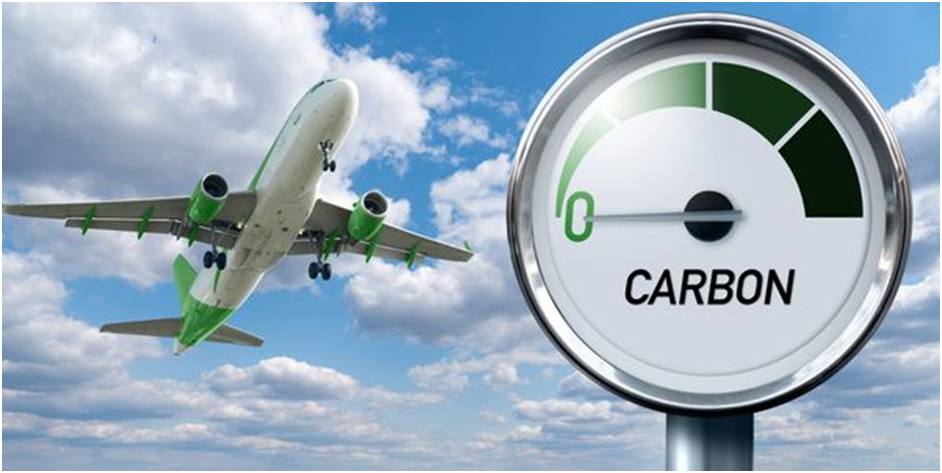
Sustainable aviation fuel (SAF) is an alternative fuel made from non-petroleum feedstock’s that reduces emissions from air transportation. SAF can be blended at different levels with limits between 10% and 50%, depending on the feedstock and how the fuel is produced. According to the International Civil Aviation Organization (ICAO), over 360,000 commercial flights have used SAF at 46 different airports largely concentrated in the United States and Europe.
Sustainable Aviation Fuel(SAF)
Worldwide, aviation accounts for 2% of all carbon dioxide (CO2) emissions and 12% of all CO2 emissions from transportation. ICAO’s Carbon Offsetting and Reduction Scheme for International Aviation (CORSIA) caps net CO2 aviation emissions at 2020 levels through 2035. The international aviation industry has set an aspirational goal to reach net zero carbon by 2050. SAF presents the best near-term opportunity to meet these goals. The Sustainable Aviation Fuel Grand Challenge, announced in 2021, brings together multiple federal agencies for the purpose of expanding domestic consumption to 3 billion gallons in 2030 and 35 billion gallons in 2050 while achieving at least a 50% reduction in lifecycle greenhouse gas emissions.

About Palm Methyl Ester

Palm Methyl Ester is a renewable and biodegradable product obtained through the transesterification of palm oil. Its excellent chemical properties make it a preferred choice for biodiesel production, industrial applications, and chemical formulations.

Benefits

Palm Methyl Ester

What is SAF?

Sustainable aviation fuel (SAF) is the main term used by the aviation industry to describe a nonconventional (fossil derived) aviation fuel. SAF is the preferred IATA term for this type of fuel although when other terms such as sustainable alternative fuel, sustainable alternative jet fuel, renewable jet fuel or biojet fuel are used, in general, the same intent is meant. ‘Biofuels’ typically refers to fuels produced from biological resources (plant or animal material). However, current technology allows fuel to be produced from other alternative sources, including non-biological resources; thus, the term is adjusted to highlight the sustainable nature of these fuels.
Sustainable aviation fuel (SAF)
The chemical and physical characteristics of SAF are almost identical to those of conventional jet fuel and they can be safely mixed with the latter to varying degrees, use the same supply infrastructure and do not require the adaptation of aircraft or engines. Fuels with these properties are called “drop-in fuels” (i.e. fuels that can be automatically incorporated into existing airport fueling systems). Moreover, to validly use the term ‘’sustainable’’ they must meet sustainability criteria such as lifecycle carbon emissions reduction, limited fresh-water requirements, no competition with needed food production (like first generation biofuels) and no deforestation.

FIRE SAFETY

SHRIPARTH FR3 fluid has a fire point of approximately 360°C, well above the minimum of 300°C required for high fire point fluid classifications. Its flash point (approximately 330°C) is higher than the fire point of most other ignition resistant dielectric fluids in use today.
In laboratory and full-scale ignition tests, SHRIPARTH FR3 fluid has demonstrated greater fire resistance than other dielectric fluid types. Based on large-scale arc ignition testing, FM Global concluded that the probability of a pool fire evolving from SHRIPARTH FR3 fluid was so low that heat release rate need not be determined or considered for FM Global approval.
Based on large-scale arc ignition and hot metal ignition tests, FM Global recognizes SHRIPARTH FR3 fluid as an equivalent safeguard to space separation, fire barriers, and fire suppression systems for most installations.
FM Global recognizes SHRIPARTH FR3 fluid as a component of Approved transformers per FM Global Standard 3990. When used in transformers containing 10,000 gallons of fluid or less, transformers separation distance to buildings and other equipment may be up to 1/10th the distance required for mineral oil filled transformers, without fire walls or deluge systems.

Sustainable aviation fuel consists of three key elements:

1

Sustainability in this context is defined as something that can be continually and repeatedly resourced in a manner consistent with economic, social and environmental aims, and conserves an ecological balance by avoiding depletion of natural resources.

2

It is a fuel for aviation with an alternative feedstock (raw material from which fuels are produced) to crude oil. In this case nonconventional or advanced fuels and includes any materials or substances that can be used as fuels, other than conventional, fossil-sources (such as oil, coal, and natural gas). It is also processed to jet fuel in an alternative manner

3

Fuel means jet fuel that meets the technical and certification requirements for use in commercial aircraft. The International Civil Aviation Organization (ICAO), a United Nations specialised agency, in some cases uses ‘Alternative Fuels’ as its terminology, and it is defined as ‘any fuel that has the potential to generate lower carbon

Sustainable Aviation Fuel – Providing Environmental Benefits :

Relative to fossil fuels, sustainably produced, unconventional, jet fuel results in a reduction in carbon dioxide (CO2) emissions across its life cycle. Carbon dioxide absorbed by plants during the growth of biomass is roughly equivalent to the amount of carbon dioxide produced when the fuel is burned in a combustion engine, which is simply returned to the atmosphere. This would allow the SAF to be approximately carbon neutral over its life cycle. However, there are emissions produced during the production of SAF, from the equipment needed to grow the crop, transport the raw goods, refine the fuel and so on. When these elements are accounted for, the use of sustainable aviation fuel has been shown to provide significant reductions in overall CO2 lifecycle emissions compared to fossil fuels, up to 80% in some cases.

Furthermore, SAF contains fewer impurities (such as sulphur), which enables an even greater reduction in sulphur dioxide and particulate matter emissions than present technology has achieved. In the case of SAF produced from Waste Plant oil , the environmental gains are derived both from avoiding petroleum use and from the fact that the waste would be otherwise left to decompose in landfill sites, producing no further benefits and dangerous greenhouse gases like methane, rather than being used to power a commercial flight, which would otherwise be powered by unsustainable, fossil-based fuel.

Providing Diversified Supply

The airline industry’s reliance on fossil fuels means that it is affected by a range of fluctuations, such as the changing price of crude oil and problems with supply and demand. SAF is an attractive alternative as its production is not limited to locations where fossil fuels can be drilled, enabling a more diverse geographic supply and a degree of energy security for states and airlines. In theory, a range of SAF feedstock’s can be grown or collected in differing conditions around the world, depending on the natural environment, wherever the aviation industry needs it. As is the case with the petroleum industry, there will likely be major producers of SAF feedstock (which will be transported to where it needs to be used), and it is also likely that local smaller scale supply chains will be established.

Providing Economic and Social Benefits

Fuel is typically the single largest operating cost for the airline industry. The fluctuating price of crude oil also makes it very difficult to plan and budget for operating expenses long-term. SAF may offer a solution to this problem since its production can be spread worldwide, and across a number of different feedstock’s, thereby reducing airlines’ exposure to the fuel cost volatility that comes with having a single energy source. SAF can also provide economic benefits to parts of the world that have large amounts of marginal or unviable land for food crops, but are suitable for growing SAF crops, or which have other sources of feedstock such as municipal waste Cooking oil. Many of these countries are developing nations that could benefit greatly from a new industry such as sustainable aviation fuel production without negatively impacting their local food production ability. On a social level, SAF could stimulate job growth, but also encourage improved waste management strategies as it is not uncommon for waste to be an environmental problem in developing countries. Implementing SAF could provide a mutually beneficial strategy to process waste, while simultaneously reducing CO2 emissions in aviation.

FAQ's

SAF gives an impressive reduction of up to 80% in carbon emissions over the lifecycle of the fuel compared to traditional jet fuel it replaces, depending on the sustainable feedstock used, production method and the supply chain to the airport.
SAF can be blended at up to 50% with traditional jet fuel and all quality tests are completed as per a traditional jet fuel. The blend is then re-certified as Jet A or Jet A-1. It can be handled in the same way as a traditional jet fuel, so no changes are required in the fuelling infrastructure or for an aircraft wanting to use SAF.
SAF is currently more costly than traditional fossil jet fuel. That’s down to a combination of the current availability of sustainable feedstock’s and the continuing development of new production technologies. As the technology matures it will become more efficient and so the expectation is that it will become less costly for customers. We are seeing increased uptake of SAF as our customers and their passengers increasingly recognize and value the benefits of the emission reductions.
SAF can drop straight into existing infrastructure and aircraft. It has the potential to provide a lifecycle carbon reduction of up to 80% compared to the traditional jet fuel it replaces. SAF will play a really important role in meeting the aviation industry’s carbon reduction targets, however, we need to use all the options to reduce carbon that we have available. There are several broad opportunities for carbon reduction across the industry such as more efficient aircraft design, smarter operations and the development of future technologies like electrification. In that regard, in 2016 Air bp became the first aviation fuel supplier to be independently certified carbon neutral for into-plane fuelling operations at all its global operated locations.